The passing of Fr. Aloy Pieris S.J. marks the end of a rare and remarkable chapter in the intellectual and spiritual life of Sri Lanka. I knew Fr. Aloy not merely as a name of global academic stature, but as a presence: warm, disarming, and quietly profound. He belonged to that diminishing generation of men who combined deep scholarship with an almost childlike simplicity of spirit.
Born on April 9, 1934, Fr. Aloy’s life was one of sustained inquiry and disciplined purpose. He hailed from a pious Catholic family from Ampitiya, Kandy. Among his siblings, there was one priest and three nuns. From an early age, it was clear that he was a prodigy. He was formed by the Jesuits at St. Aloysius’ College, Galle, his alma mater, which led him to join the Society of Jesus. Although he wished to pursue a life in the arts, his superiors directed him toward an academic path. Speaking over a dozen oriental and western languages, he was a top scholar from a very young age. After long spiritual training in Sri Lanka, India, and Italy, Fr. Aloy was ordained in 1965. Upon returning to Sri Lanka, he was stationed at the Jesuit House “Nirmala,” Bambalapitiya, where he rendered yeoman service to the community, especially the youth.
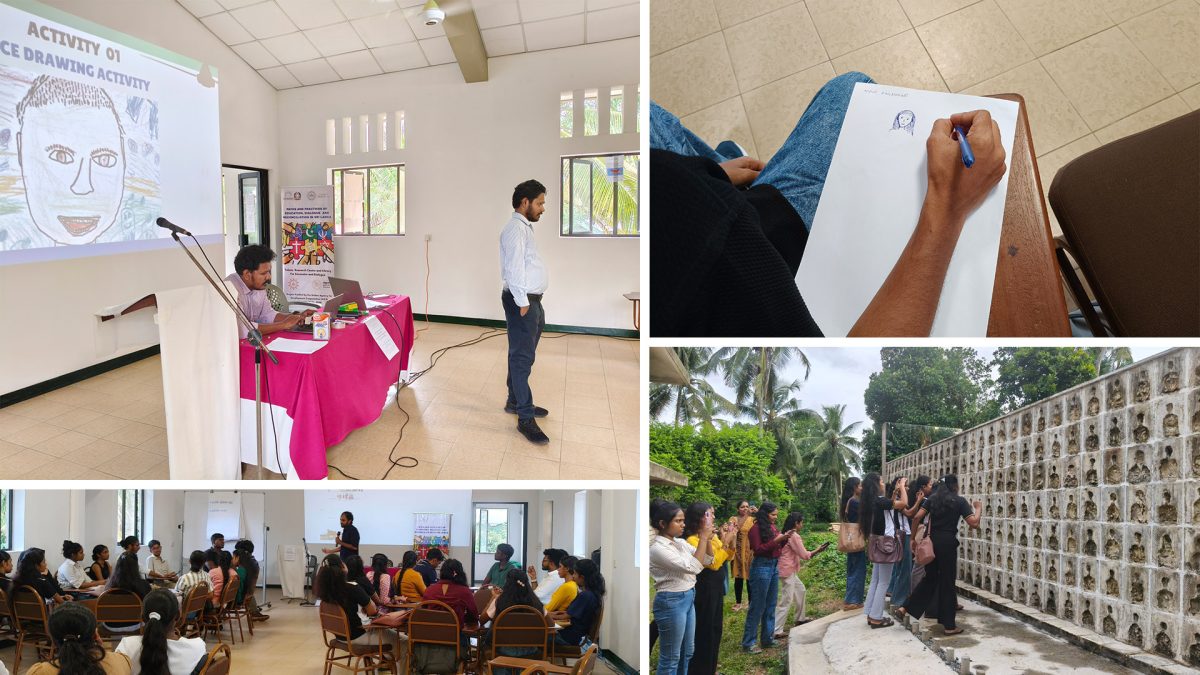
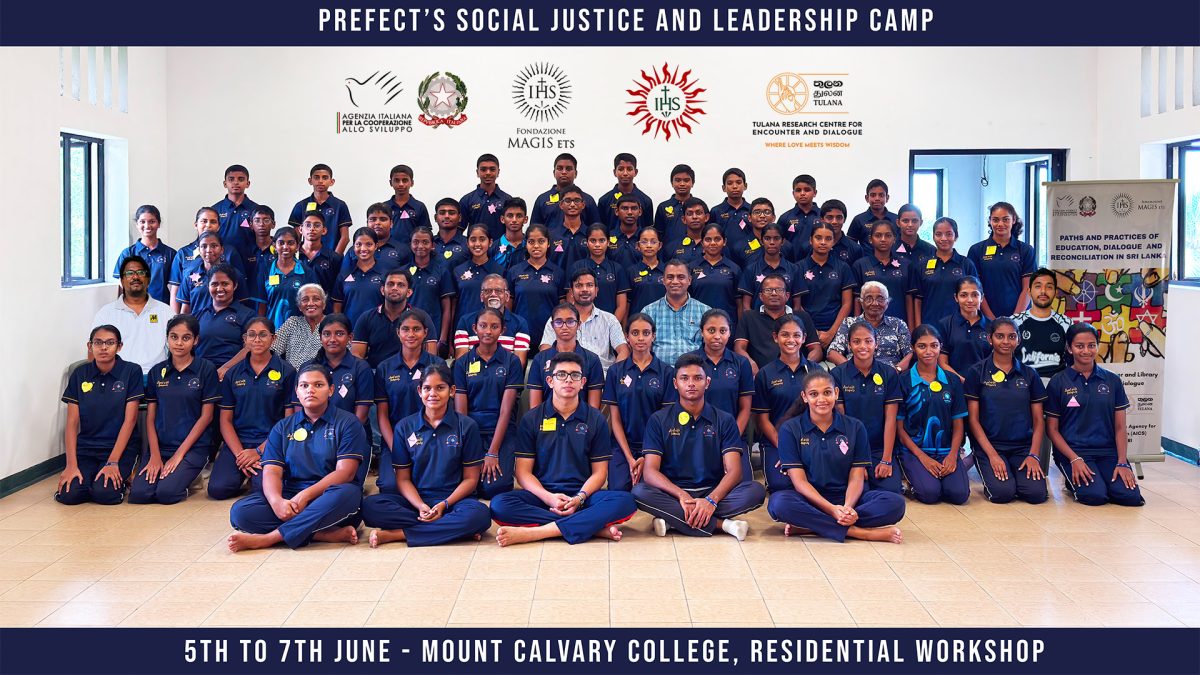
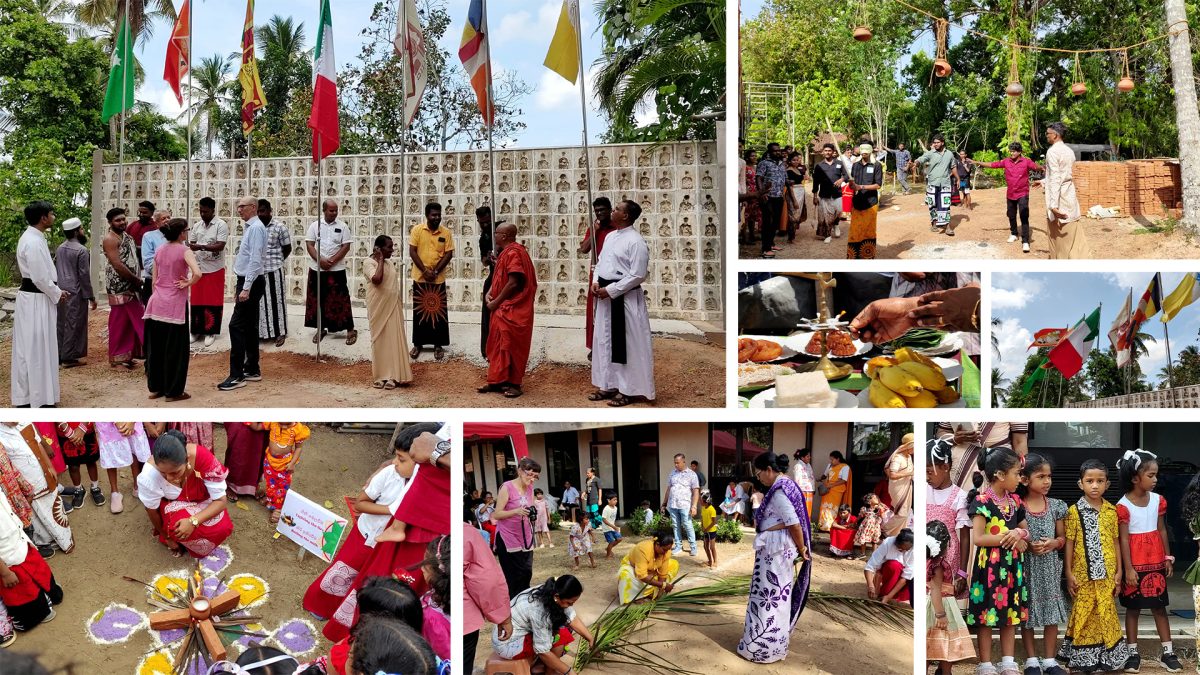
His founding of the Tulana Research Centre, Kelaniya in 1974 was no ordinary institutional act. It was, in essence, a response to the intellectual and spiritual tensions of the time—between Buddhism and Christianity, between faith and social unrest, and between the educated elite and the marginalised youth of the island. Tulana, under his care, grew into something far greater than a research centre; it became a living space of encounter.
He was my spiritual father, mentor, teacher, and friend. Fr. Aloy welcomed me as a serious “scholar” when I was just a teenager. He taught me the scientific approach to scholarship, the discipline of the desk, and instilled in me values and morals. He showed me how to be a praying Christian and, above all, shaped my method of thinking. He taught me to think critically, to understand different views, religions, and methods. Without doubt, he made the greatest impact on my life.
When there was a personal or professional crisis, I ran to Tulana, which was almost a hop, step, and jump from home. My evenings after school, and later after work in Ratmalana, were often spent there. We spoke of history, Church affairs, art, film, theology, and politics (on which we often “agreed to disagree”). I once joked with him, saying, “Father, I was born in 1998 and you in 1934—how did I become 64 years older, or you 64 years younger?”
The last 13 years of my life were shaped by him, and many of my achievements are a direct result of his guidance. When I had difficulty deciding on a career, he came to my rescue. He shared his own struggles as a student and made me confident in the multiple interests I had as a youth.
Through him, I came to know many remarkable personalities, among them Robert Crusz, Sr. Greta Nalawatte, the late Sr. Frances, Fr. Sarath Iddamalgoda, Nimal Pieris, and Dr. Shiela Fernando. Along with the staff of Tulana, they were his true friends and stood by him through many challenges. As we remember Fr. Aloy, these individuals too must be acknowledged for their steadfast devotion to him.
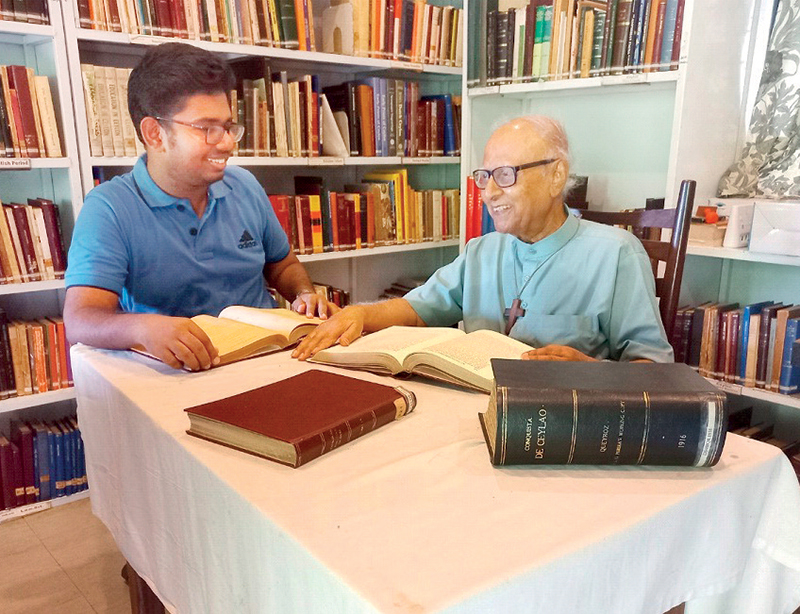
In my own small way, I introduced Fr. Aloy to some of my family and friends in Kelaniya and elsewhere. We even began a small Bible study group with weekly sessions. On one occasion, I surprised him by bringing Dr. Michael Roberts, who was visiting Sri Lanka, to Tulana. The two, being old school friends, had not met in decades. In time, I introduced many others who came to appreciate the joy of conversation with him. These memories will always bring a smile to those who knew him.
What struck me most about Fr. Aloy was the seamless manner in which he held together worlds that are often kept apart. He was at once a Jesuit priest, a scholar of Buddhism, an Indologist, and a social thinker. These were complemented by his wide range of interests in music, art, literature, and cinema. His engagement with Pali texts and the Abhidhamma was rigorous, sustained, and deeply respectful. Yet he never allowed intellectual pursuit to become detached from lived reality. For him, theology was not merely to be written—it had to be lived, tested, and shared among people.
The Tulana Library, enriched by the legacy of Fr. S. G. Perera, stood as a testament to this vision—a place where history, religion, philosophy, and culture met in quiet dialogue. Scholars came, certainly, but so did students, workers, clergy, and artists. It was this breadth that defined his work. He refused to confine knowledge within academic walls.
Yet, if one were to look beyond his publications, lectures, and global recognition, one finds perhaps his most meaningful contribution elsewhere. His role in co-founding the Centre for Education for Hearing Impaired Children reveals a side of him that no academic title can capture. He himself regarded this as his greatest achievement.
Personally, what remains with me is not the scholar alone, but the man. Conversations with him were sometimes heavy (as my intellect grew), yet never distant. There was always humour, a certain lightness, and an openness that made one feel immediately at ease. His faith was not worn as authority; it was lived quietly, inseparable from his commitment to justice and human dignity.
Fr. Aloy will be remembered in many ways: scholar, priest, thinker. However, for those of us who knew him, he will remain something rarer: a deep human presence, rooted in faith, guided by intellect, and sustained by an enduring generosity of spirit.
Fr. Aloy, without exaggeration, stands as the most remarkable human I have encountered in my life. To the world, he is a towering scholar of liberation theology and Indology; to me, he was something far more personal—a mentor, a guide, and in many ways, a fatherly presence.
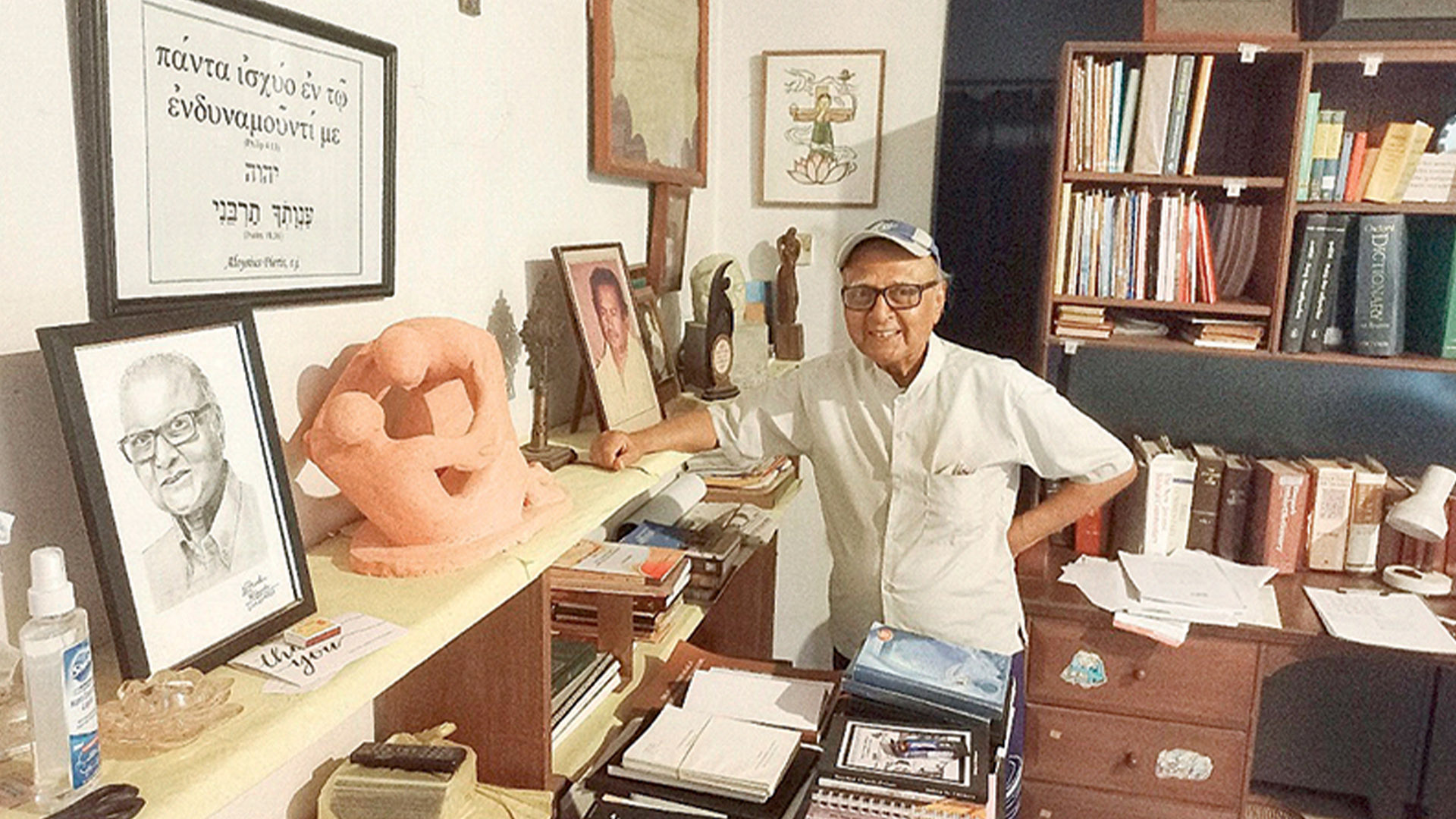
For over sixty years, he remained a leading voice in promoting the reforms of Vatican II in Sri Lanka, often at a time when much of the Church chose to ignore them. He championed the cause of the poor and lived a life of remarkable simplicity. Clad in a simple sarong and his trademark “Astron” cap, he had a way of putting everyone at ease.
He was also a man of culture. He could play several musical instruments, especially the piano, and would often sing an old C. T. Fernando song. In a moment that reflected both courage and creativity, he once, with the permission of the late Fr. Chiriatti, removed the Blessed Sacrament at Nirmala Jesuit House to screen classic films for the youth of Bambalapitiya.
Yet, despite all his academic achievements, his most cherished work was the Centre for Education of Hearing Impaired Children, which he ran with Sr. Greta Nalawatte for over 40 years. He never charged a cent from these children, who came from the poorest communities. I have personally witnessed him paying teachers’ salaries from his own earnings, often from the funds he received teaching at numerous universities. Many of these children, once considered unfit for society, went on to become graduates, professionals, and responsible members of society. On his 90th birthday, when some of them spoke, the entire audience was deeply moved.
A liberal mind, far ahead of his time, he had his share of opponents—sadly, many from within the Church. This never troubled him, but one cannot help but feel that the Church itself lost much by not making fuller use of his gifts.
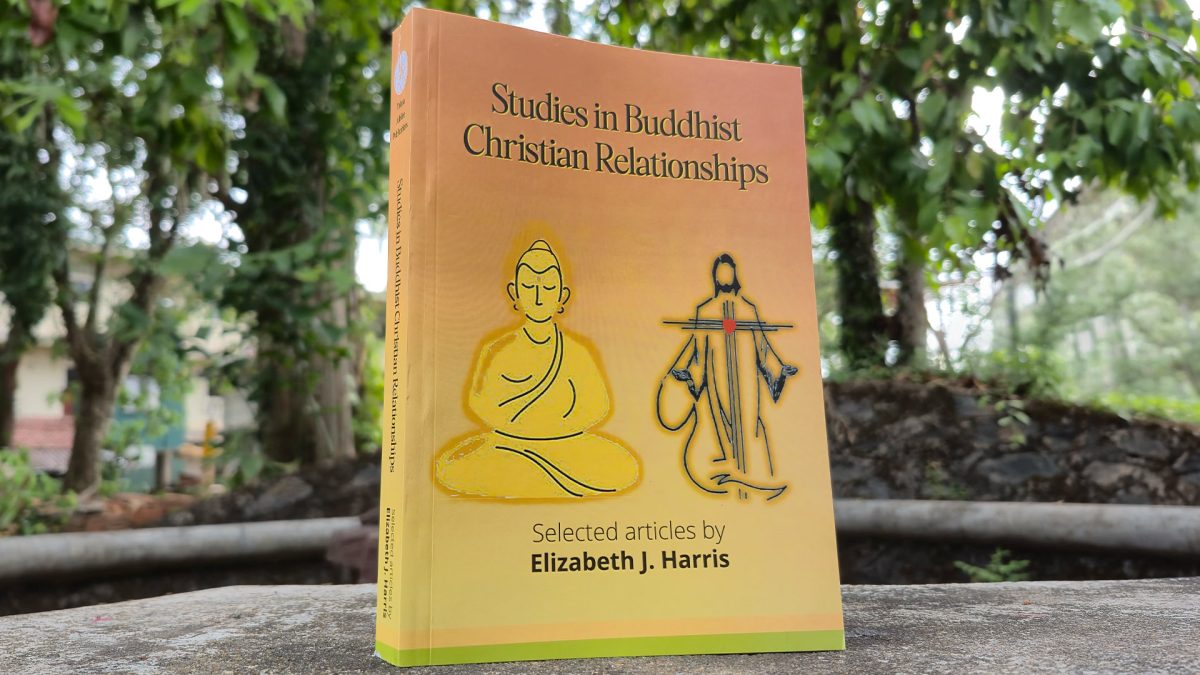
In 2023, when he entrusted me with the task of editing and producing his biography, I realised that he had given me a rare and golden opportunity to study his life in depth. As his youngest confrere, I was deeply moved by the trust he placed in me. We spent many months working together, producing what I believe is one of the finest autobiographical accounts of a priest in this part of the world. His intention was simple: to “glorify God,” whom he believed had worked through him in achieving so much in life.
I first came to know of him in 2013 while still a schoolboy at St. Joseph’s College. What began as curiosity soon turned into a life-defining encounter. Living just a short distance away at Tulana, I went to meet him during a vacation. I was only 15; he was nearing 80. Yet from the very first moment—his warm welcome, his simplicity of dress, and his ease of conversation—I knew this was no ordinary man.
Fr. Aloy possessed a rare quality: he lived what he preached. Despite his immense academic stature, there was not an ounce of pretension in him. Over the years, I visited him regularly, drawn by a presence that was both intellectually stimulating and spiritually grounding. Though physically small, he was a giant in courage, conviction, and compassion. He had no tolerance for injustice and consistently stood for the poor and the marginalised.
What he did for me personally cannot be overstated. At a time when I lacked direction and confidence, he nurtured my inner life. He taught me prayer—not as ritual, but as a lived relationship with God. He taught me to think, to question, and most importantly, to love. In moments of both success and crisis, he was always present, offering counsel, prayer, and strength.
One of his greatest gifts to me was opening the doors of the Tulana Library. Through the legacy of Fr. S. G. Perera and his own lifelong additions, it became a treasure trove of knowledge. It was there that he recognised in me a passion I had not yet understood myself. “You must pursue history,” he said—and that single direction changed the course of my life.
Fr. Aloy was also a demanding teacher. He insisted on discipline in thought, objectivity in writing, and fidelity to sources. Under his guidance, I began my early research and publications. Even in disagreement, I found in him a man of deep faith, humility, and sincerity.
To me, he was not merely a scholar or priest. He was, quite simply, a man of God—one who shaped lives quietly, firmly, and with enduring love. Today, there is a void in my life. I have lost the greatest human being I have known: a fatherly figure who understood me long before anyone else, who comforted me in difficult times and celebrated the happier ones. He lived his life to the fullest and inspired those around him to do the same. A most beautiful heart and an innocent spirit, hidden beneath an intellectual and sharp façade.
As perhaps the youngest of his close friends, I owe him immensely for the profound impact he had on my life, bringing me closer to God while encouraging me to pursue my dreams in accordance with a higher calling. From Bible discussions to historical analysis, I have hundreds of memories of this great man, who made the last 13 years of my life worth living.
May his saintly soul rest in peace.
By Avishka Mario Senewiratne
From The Island